
A blocked toilet can be a pretty unpleasant experience. It can be smelly and embarrassing (especially if you happen to be a visitor!). It can be expensive to clean up household items that have been damaged by an overflowing toilet, not to mention a health hazard.
What Are The Causes Of A Toilet Blockage?
A blocked toilet is usually caused by the following:
- Too much toilet paper
- Non-degradable materials (e.g. sanitary products, wet wipes)
- Foreign objects (e.g. toys, rags)
- Grease or oil buildup
- Hair
- A malfunctioning flush valve or flapper
- A partial clog that restricts water flow
- Blocked sewer
In some cases, a blocked sewer line can also cause a blocked toilet. A blocked sewer line is a blockage that occurs in the main sewer pipe leading from a building’s plumbing system to the municipal sewer system. The blockage can be caused by a buildup of various substances such as grease, hair, and non-degradable materials (e.g. wipes, sanitary products). It can also be caused by foreign objects that have been flushed down the toilet, tree roots that have grown into the pipes, or corrosion and deterioration of the pipes over time. A blocked sewer line can cause sewage backups, slow drains, and unpleasant odours in the building.
How To Unblock a Toilet Drain Yourself
- Plunger
- Closet Auger
- Hot Water and Dish Soap
- Baking Soda and Vinegar
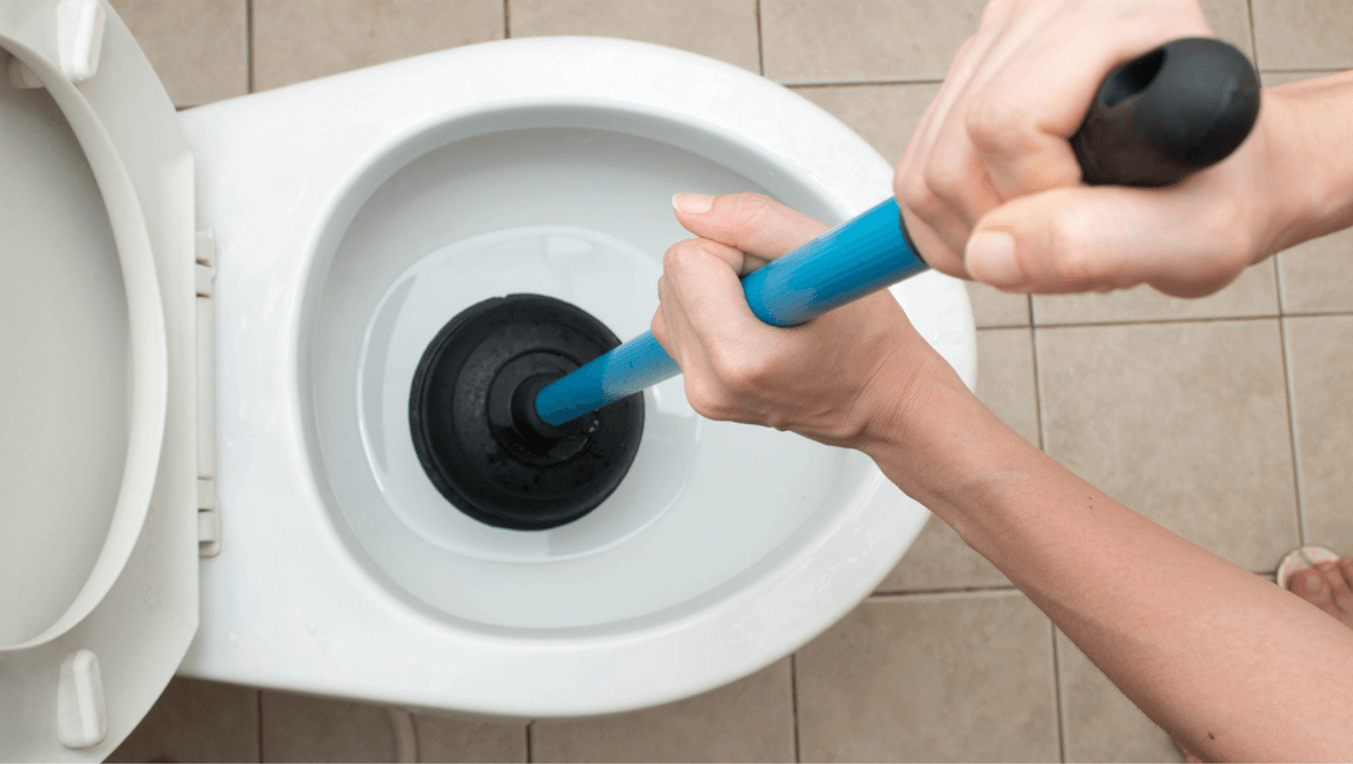
1. Use a plunger: A plunger can help clear a simple clog by creating suction that dislodges the blockage.
To use a plunger on a blocked toilet, follow these steps:
- Fill the toilet bowl with enough water to cover the plunger cup.
- Place the plunger directly over the drain and create a seal by pressing the cup against the bottom of the bowl.
- Pump the plunger up and down rapidly, using a forceful and rhythmic motion. The suction created by the plunger will help loosen and remove the blockage.
- Repeat the plunging motion several times.
- After several plunges, quickly remove the plunger and check if the water in the bowl drains.
- If the water drains, flush the toilet several times to clear out any remaining debris.
- If the water does not drain, repeat the plunging process until the clog is cleared.
2. Use a toilet auger: A toilet auger is a plumbing tool that can reach deeper into the toilet drain to remove the blockage.
To use a toilet auger to fix a blocked toilet, follow these steps:
- Turn off the water supply to the toilet by turning the valve clockwise under the tank.
- Flush the toilet to empty the bowl and make sure the water level is low.
- Place the auger into the toilet bowl and position the snake part into the drain opening.
- Turn the handle clockwise to feed the snake into the pipes until you feel resistance. This resistance is the blockage.
- Crank the auger handle back and forth to break up and remove the clog.
- Slowly retract the auger, making sure to remove any debris that may have been dislodged.
- Turn the water supply back on and flush the toilet several times to clear any remaining debris and ensure the clog has been cleared.
- If the blockage persists, repeat the process or call a plumber for further assistance.
3. Hot water and dish soap: Pour a mixture of hot water and dish soap into the toilet bowl and wait a few minutes. The soap can help break down grease or oil buildup and the hot water can help loosen the clog.
To use hot water and dish soap to clear a toilet clog, follow these steps:
- Pour about 4 cups of hot water into the toilet bowl.
- Squeeze about 1/4 cup of dish soap into the water.
- Wait for 10-15 minutes to let the soap and hot water work on the clog.
- Flush the toilet several times to clear the blockage.
- If the blockage is not cleared, repeat the process or try a different method.
Note: Make sure the water is hot, but not boiling, to avoid cracking the porcelain bowl.
4. Baking soda and vinegar: Pour a mixture of baking soda and vinegar into the toilet bowl and wait a few minutes. The mixture will fizz and help break down the clog.
To use baking soda and vinegar to clear a blocked toilet, follow these steps:
- Pour about 1 cup of baking soda into the toilet bowl.
- Add about 1 cup of white vinegar to the bowl.
- The mixture will start to fizz.
- Wait about 15 minutes for the fizzing to subside.
- Flush the toilet several times to clear the clog.
- If the clog is not cleared, repeat the process or try a different method.
Note: This method can take some time to work and may require multiple attempts to clear the clog.
If these methods don’t work, it may be necessary to call a local, Sydney plumber or use chemical drain cleaners, which can be harsh on pipes and should be used with caution.
Unblocking A Toilet Using A Professional, Drain Clearing Company
You may have some luck in loosening the blockage using a plunger but generally plunging will only work for small blockages. If you see water backing up in the sinks or showers whenever you flush, it’s time to call a professional drain clearing company. Professional drain clearing companies will be able to clear the line completely using specialised equipment such as a high pressure water jet.
Professional drain clearing should keep your drains clear for at least 3 months. However depending on the condition of your drains and proximity to aggressive tree root systems, drains can block up again more quickly.
The Best Blocked Drain Solution?
If you experience a blocked toilet repeatedly it could indicate there is something more seriously wrong with your drains. If so you will need to ask a drain clearing company to conduct a CCTV inspection of your drains. They will diagnose the problem, so you can make an informed decision about how to fix a blocked toilet.
If you’re fed up with a smelly toilet and the worry of it backing up into your bathroom call Pipe Relining Solutions. We can investigate and provide you with a free quote to fix your problem permanently. Call us today on 1300 366 834.